
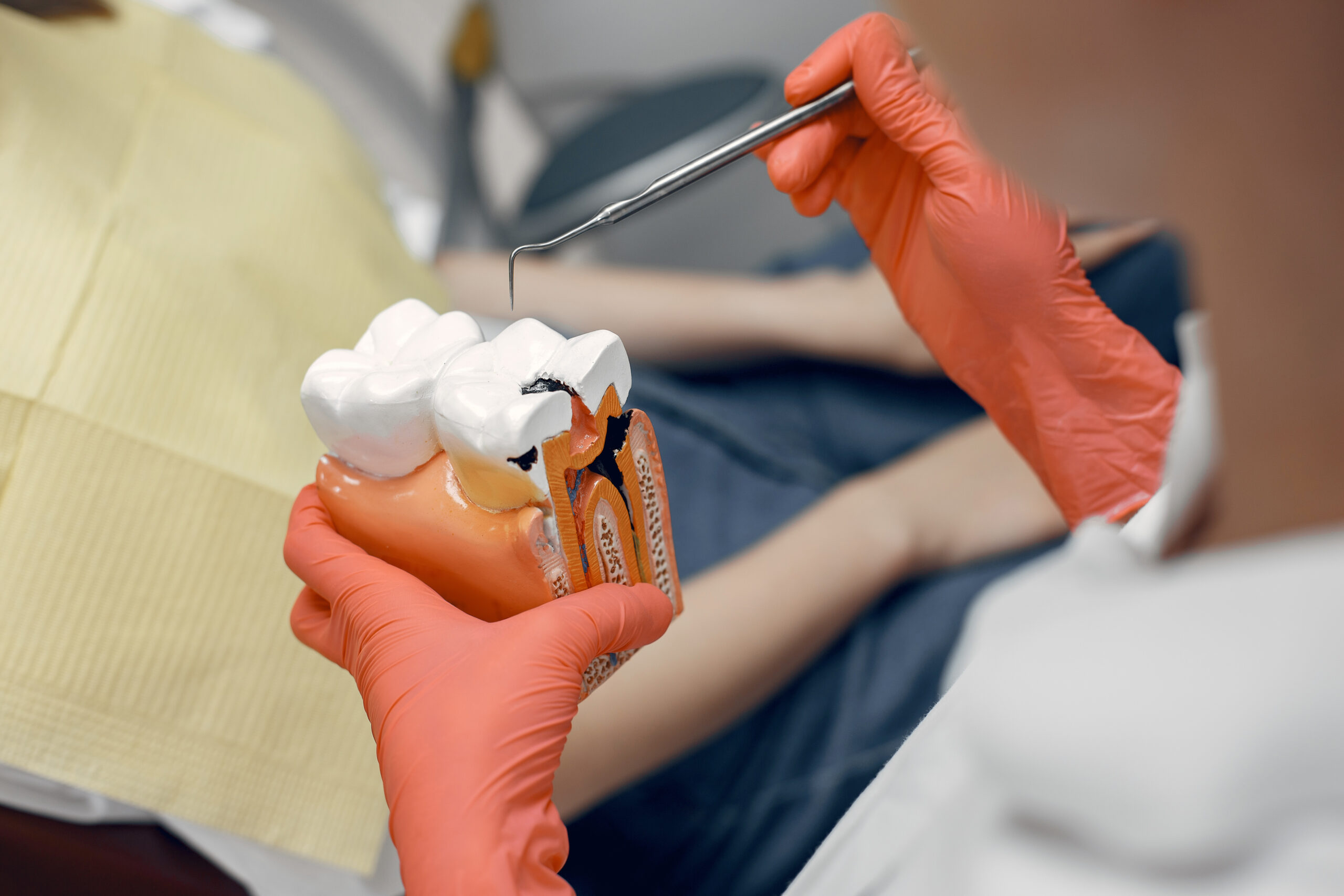
Many adults assume that if nothing hurts and X-rays look clear, their teeth are fine.
However, that is not necessarily so. Dentists are receiving an increasing number of cases of early-stage decay not evident on X-rays and not causing pain. These are often called “invisible cavities.”
It is here that fluoride treatment in Oxnard is increasingly becoming important not only in preventing cavities but also in catching and managing damages before it becomes apparent or serious.
What “Invisible Cavities” Means
Invisible cavities are not imaginary, it is merely very early stages of tooth damage.
At this point, the enamel is already weakened by the exposure to the acid, but the damage has not yet taken the shape of the deep hole. Because of that-
- X-rays might not be able to see it clearly.
- There may be no pain or sensitivity
- The surface may look normal
When patients are referred to seek fluoride therapy in Oxnard, they are usually referred because they have been informed that they have early enamel changes that are required to be treated before they deteriorate.
Why Adults Are Seeing This More Often
The reason behind this trend is becoming increasingly more popular due to a number of reasons.
Life routines have evolved. Many adults now-
- Drink coffee or acidic beverages in the daytime.
- Snack more frequently
- Have a dry mouth as a result of stress or drugs.
These increase the frequency of exposure of teeth to acid, which weaken the enamel over time. This causes early damages which are not necessarily easy to spot without close scrutiny.
This is the reason why fluoride treatment in Oxnard is becoming more and more an aspect of treatment, but not necessarily treatment.
Why X-Rays Don’t Always Catch Early Damage
X-rays are beneficial but they are limited.
They are created to monitor changes in density, which implies that they are effective when the decay goes deeper into the tooth. The premature weakening of the enamel does not always manifest itself distinctly.
Even though your X-rays appear normal, you could still have some areas of concern. This is one of the reasons why dentists prescribe fluoride treatment in Oxnard so as to deal with the problems before they can be seen in the imaging.
What Dentists Look for Instead
As early cavities might not be seen on X-rays, dentists use other indications.
These can include-
- Minor alterations in the color of enamel.
- Regions that are rough or less than usual.
- Patterns of acid wear or demineralization
In the cases where these signs are exhibited, it is common to recommend fluoride treatment in Oxnard to strengthen the enamel before the damages escalate.
Why Toothpaste Alone May Not Be Enough
Use of fluoride toothpaste which is already in use by most people may not be enough in the case of the higher risk.
Professional fluoride treatments are more potent and take longer to wear off the teeth. They offer a more focused advantage contrasting with just brushing each day.
When patients seek information about fluoride treatment in Oxnard, they are usually given advice to have a combination of the two, i.e. to take care of it on a daily basis at home and have the professional treatments done by professionals on a regular basis.
The Shift Toward Preventive Dentistry
Dentistry is slowly shifting towards not waiting until cavities are clear.
Rather than addressing damage when it has become critical, emphasis is currently being put on capturing and controlling damage at its early stages. This strategy minimizes the need to have more invasive procedures in the future.
The role of fluoride treatment in Oxnard in this shift. It enables the dentists to intervene at a level where the tooth can still be retained without having to drill it.
How Puri Dentistry Approaches Early Detection
We are interested in finding the changes that have occurred before they become noticeable issues.
We: When patients come to get their fluoride done in Oxnard we-
- Take a close look at enamel to detect any initial signs of damage.
- Recommend fluoride where it is able to have a significant impact.
- Educate patients about practices that can minimize exposure to acids.
The aim is to prevent the early stages of problems, rather than cure them at a later date.
Conclusion
Invisible cavities are increasingly becoming prevalent particularly in adults with contemporary lifestyles.
They are not necessarily visible in X-rays, or cause immediate symptoms, but may still progress in the event that they go untreated. This is why fluoride treatment in Oxnard is already a significant element of preventative treatment in the present day.
It reinforces enamel at an earlier stage, which helps prevent more complicated solutions in the future and makes your teeth healthier in the long term.