
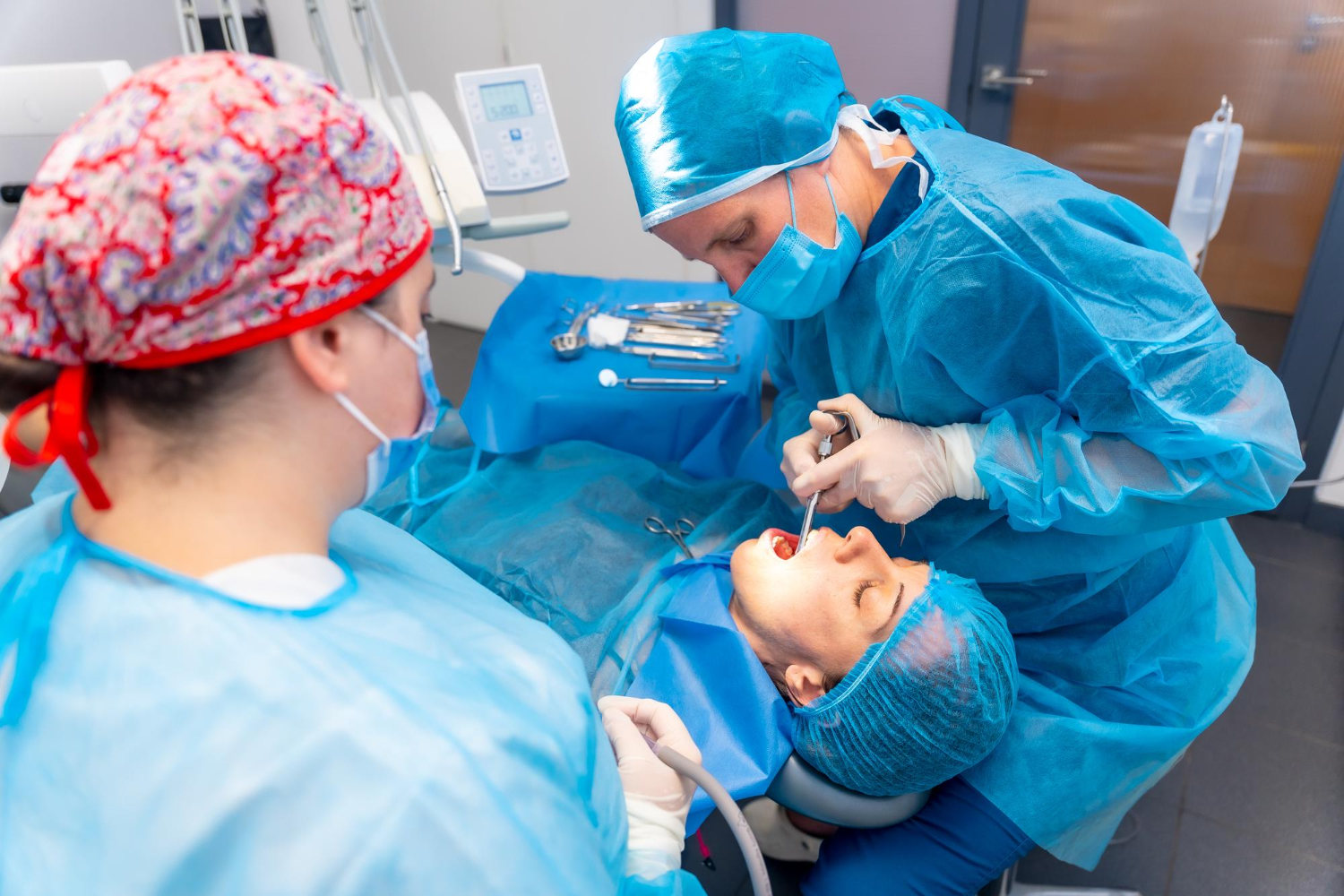
We had a patient ask us point blank before her wisdom tooth appointment, “Can’t you just numb it and get it over with?” It’s a completely reasonable question, and for a lot of procedures, that’s exactly what happens.
But not every case works that simply, and understanding why some patients need more than local anesthesia is exactly the kind of conversation we think more people deserve before booking with oral surgeons in Oxnard.
Let’s break down how this decision gets made, because it’s rarely about preference alone.
What Local Anesthesia Covers
Local anesthesia numbs the specific area being treated while you stay fully awake and aware throughout the procedure. You’ll feel pressure and movement, but no sharp pain, and you can talk, ask questions, and even watch what’s happening if you want to.
For straightforward procedures, like a single tooth extraction with no complications, this is usually all that’s needed, and plenty of oral surgeons in Oxnard handle the majority of their cases exactly this way.
Where Local Anesthesia Starts Falling Short
Here’s where things shift. Some procedures involve more time, more manipulation of bone or tissue, or multiple teeth being addressed in one sitting. Staying fully alert and comfortable through an hour or two of that kind of work is a very different experience than a quick fifteen-minute extraction.
This is exactly the point where sedation enters the conversation, not because local anesthesia fails at numbing, but because comfort during longer or more involved procedures requires something more than just blocking pain signals.
The Anxiety Factor Nobody Wants to Admit Out Loud
We’ve noticed patients sometimes downplay their own anxiety, assuming it makes them seem overly dramatic compared to other patients handling the same procedure calmly. That’s simply not how this works.
Genuine dental anxiety changes how a body responds during a procedure, sometimes making even a straightforward extraction feel unbearable without added support. Oral surgeons in Oxnard will ask you about your anxiety history directly, if they are taking your problem seriously. Before taking you to the chair they will understand your concerns.
Who Typically Needs Sedation Rather Than Local Alone
- Patients undergoing multiple extractions or complex bone-related work in one visit
- Anyone with a strong gag reflex that makes local anesthesia alone uncomfortable
- Patients with significant dental anxiety or a history of panic during past procedures
- Cases involving impacted teeth that require more extensive surgical access
- Younger patients or those who struggle to stay still through longer procedures
Why This Isn’t a One-Size-Fits-All Decision
We look at more than just the procedure itself when deciding this. Medical history matters too, since certain health conditions affect how safely sedation can be administered.
Age plays a role, and so does how a patient has responded to anesthesia during past dental work. Oral surgeons in Oxnard should be asking detailed questions here rather than defaulting to the same approach for every patient walking through the door.
What Recovery Looks Like Differently Between the Two
Local anesthesia wears off within a few hours, and patients can usually drive themselves home and resume normal activities relatively quickly.
Sedation requires a longer recovery window, a ride home arranged in advance, and typically clearing the rest of your day since coordination and alertness take longer to fully return. This difference alone influences which option makes more practical sense depending on your schedule and support system that day.
Why We Walk Through This Conversation Carefully
At Puri Dentistry, we don’t want patients feeling like sedation is either unnecessary drama or something reserved only for the most extreme cases. It’s simply a tool matched to the complexity of the procedure and the individual sitting in the chair. We’d rather spend extra time during your consultation figuring out which approach genuinely fits your situation than assume the same plan works for everyone.
Making the Right Call Before Your Procedure
If you’re unsure which option fits your upcoming procedure, that’s worth bringing up directly rather than assuming local anesthesia is always the default or that sedation is only for major surgeries.
Oral surgeons in Oxnard who take the time to match the approach to your specific case, rather than your procedure category alone, tend to leave patients feeling far more prepared and far less anxious walking in.
The Bottom Line on Choosing Between the Two
Neither option is inherently better, they simply serve different situations.
- Understanding what your specific procedure involves, along with your own anxiety level, and
- medical history is what really determines whether local anesthesia alone will serve you well or whether sedation deserves a real place in the conversation before your appointment.