
Key Takeaways
- Crossbites are tricky to fix because the top and bottom teeth don’t fit together right.
- Metal braces are a great way to fix crossbites. Stahl’s wires help move the teeth gently to the right spots.
- Advanced brackets allow orthodontists to control rotation, angulation, and bite correction more accurately.
- Puri Dentistry uses modern techniques to fix crossbites faster and with more comfort than older systems.
Why can’t aligners fix my crossbite, but braces can? Some bite problems need a level of control that clear aligners can’t always deliver. Crossbites are one of them. When the upper teeth sit inside the lower teeth, instead of overlapping the way they should, each tooth needs to move in a very specific direction. That’s where traditional metal braces still outperform almost every other orthodontic option.
At Puri Dentistry, we treat many patients who feel frustrated by jaw discomfort, uneven wear, or chewing problems caused by a crossbite. Once they understand how modern wires and brackets work together, they realize why the most predictable solution is still braces.
Today’s braces fix crossbites more quickly, comfortably, and accurately than before.
What Makes a Crossbite More Complicated Than Other Bite Issues?
A crossbite isn’t just a crooked tooth; it’s a mismatch between how the upper and lower jaws fit together. The misalignment can appear:
- On one side of the mouth
- On both sides
- Only in the front teeth
- Only in the back molars
- Or as a mix of both
Because of this complexity, each tooth has to move in its own direction, angle, and rotation. This is hard to achieve with removable systems, but traditional metal braces give the orthodontist full control.
Common Problems Caused by Crossbites
- Uneven wear on teeth
- Jaw joint strain
- Gum recession on affected teeth
- Difficulty biting or chewing
- Asymmetrical facial growth in younger patients
Correcting a crossbite is about more than straightening teeth; it’s about restoring a healthy bite.
How Traditional Metal Braces Correct Crossbites
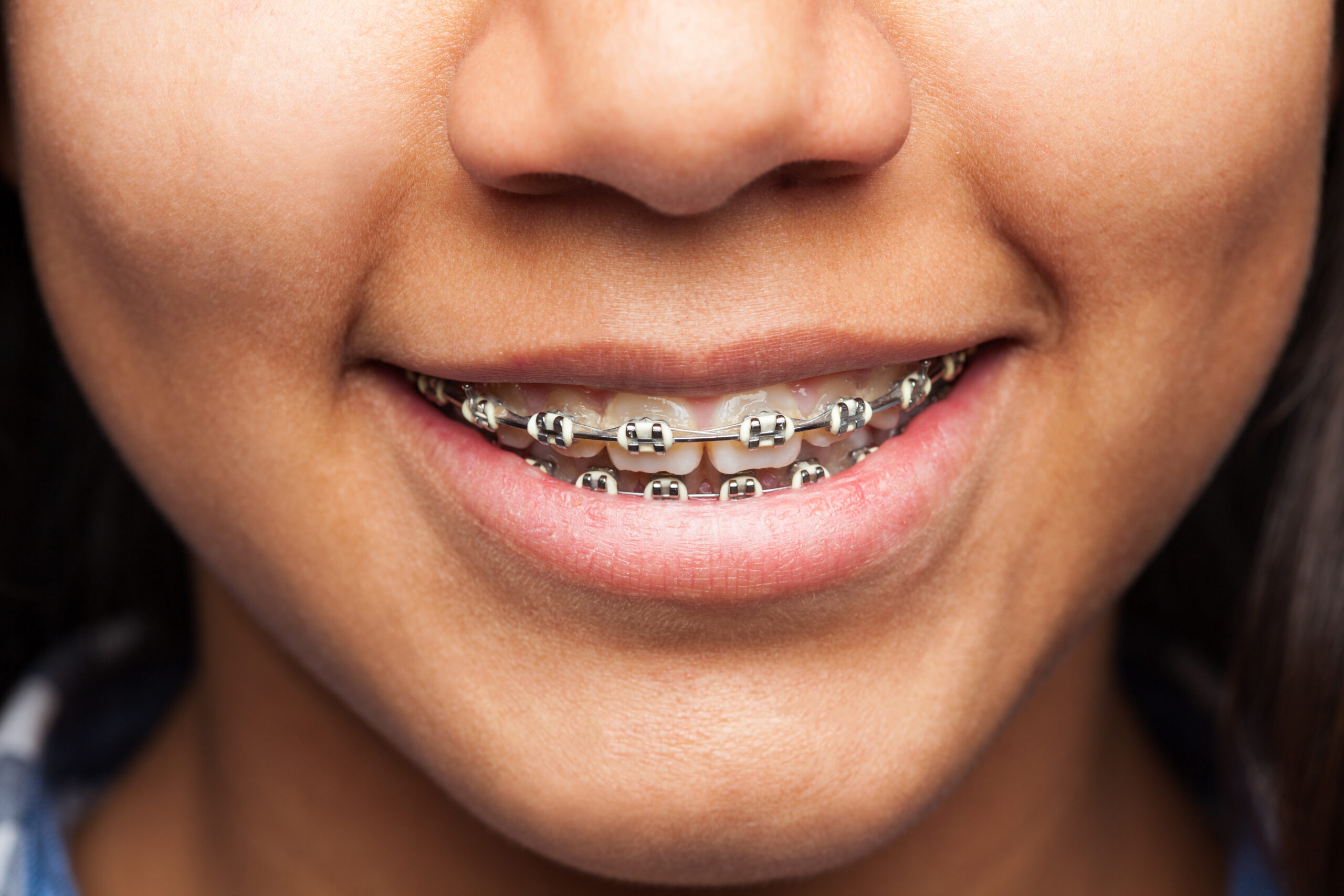
Today’s braces are smaller, smoother and more precise than older versions. They use three components:
1. Metal brackets
Bonded to each tooth, these act as handles.
2. Archwires
These apply the pressure needed to move teeth.
3. Elastics or other auxiliaries
Used when extra bite correction is needed.
Together, they let dentists apply controlled force from multiple directions, something extremely important for crossbite correction.
The Role of Stahl’s Wires in Faster Bite Correction
Stahl’s wires are a newer type of orthodontic wire engineered for flexibility and strength. They apply continuous, light force over time. This is ideal for crossbite correction because the wire can:
- Bend gently without losing strength
- Move teeth in three dimensions
- Hold stability even with large bite corrections
- Reduce the discomfort associated with older, stiffer wires
Patients who come in asking about traditional metal braces often worry about pain or slow progress. Stahl’s wires solve both problems.
Why Stahl’s Wires Work So Well
- They adapt to complex tooth positions
- They deliver more consistent movement
- They are less likely to cause pressure spikes
- They make early-stage bite correction quicker
This means crossbite cases that used to take many months begin correcting sooner and more comfortably.
Modern Brackets Offer More Precision Than Ever
Today’s orthodontic brackets are engineered with specific angles built into them. This lets orthodontists rotate and position each tooth with exceptional accuracy.
Modern Brackets Provide:
- Better control of tooth root position
- More predictable rotation
- Faster alignment
- Less friction, meaning smoother tooth movement
Fixing a crossbite means not only moving teeth sideways but also turning them for better support.
When people want metal braces, they often don’t know how much better they have become.
Elastics: The Final Step in Correcting the Bite
While the brackets and wires do the initial heavy lifting, elastics often provide the final step in fixing the way the upper and lower teeth meet.
Elastics help:
- Pull the jaw into proper alignment
- Balance the bite
- Stabilize the corrected position.
- Close gaps that crossbites can create.
They might look simple, but they play a big role in finishing the bite correction.
How Long Does Crossbite Correction Take?
The time varies depending on.
- The number of teeth involved.
- Whether the crossbite is in the front or back.
- The severity of misalignment
- Age and bone flexibility
- Compliance with elastics
On average, crossbite correction takes 6–18 months, but modern techniques shorten treatment time compared to older braces.
Why Many Oxnard Patients Still Choose Traditional Metal Braces
People choose braces for crossbite correction because they offer:
- Maximum control
- Most predictable results
- Ability to correct complex jaw relationships.
- Faster early movement with Stahl’s wires.
- High success rate even for severe cases.
Aligners are great for mild or moderate alignment issues, but traditional metal braces remain the gold standard for fixing crossbites in both teens and adults.
Conclusion
Fixing a crossbite means moving teeth in the right way. New braces are better and more comfortable, making them good for tough bite problems. At Puri Dentistry, we check how your teeth and jaw move to create a fast and safe plan to correct your crossbite.
If your bite feels off, your jaw is uneven, or your teeth are wearing down on one side, the right braces can make all the difference, and we can guide you through every step.
FAQ
Why are traditional metal braces better for correcting crossbites?
Traditional metal braces give the dentist full control over how each tooth moves. Crossbites require very precise adjustments, and braces can move teeth in ways that aligners usually cannot.
What makes crossbites harder to fix than other bite problems?
A crossbite affects how the upper and lower teeth fit together, not just how straight the teeth are. Each tooth may need to move in a different direction, which makes the treatment more complex.
Do modern braces make a difference?
Yes, they do. Today’s braces have special angles that help move teeth into the right place. This makes fixing your teeth faster and easier.
Will elastics be required for crossbite treatment?
Most crossbite cases require elastics at some point. They help the top and bottom teeth line up better and keep the bite steady after fixing it.
How long does it take to fix a crossbite with braces?
Crossbite correction usually takes 6–18 months, depending on severity, number of teeth involved, age and how well the patient follows elastic instructions.
Can aligners fix a crossbite at all?
If you have a mild crossbite, you might be able to use clear aligners to fix it. But if your crossbite is more serious, you will likely need metal braces for the best results.