
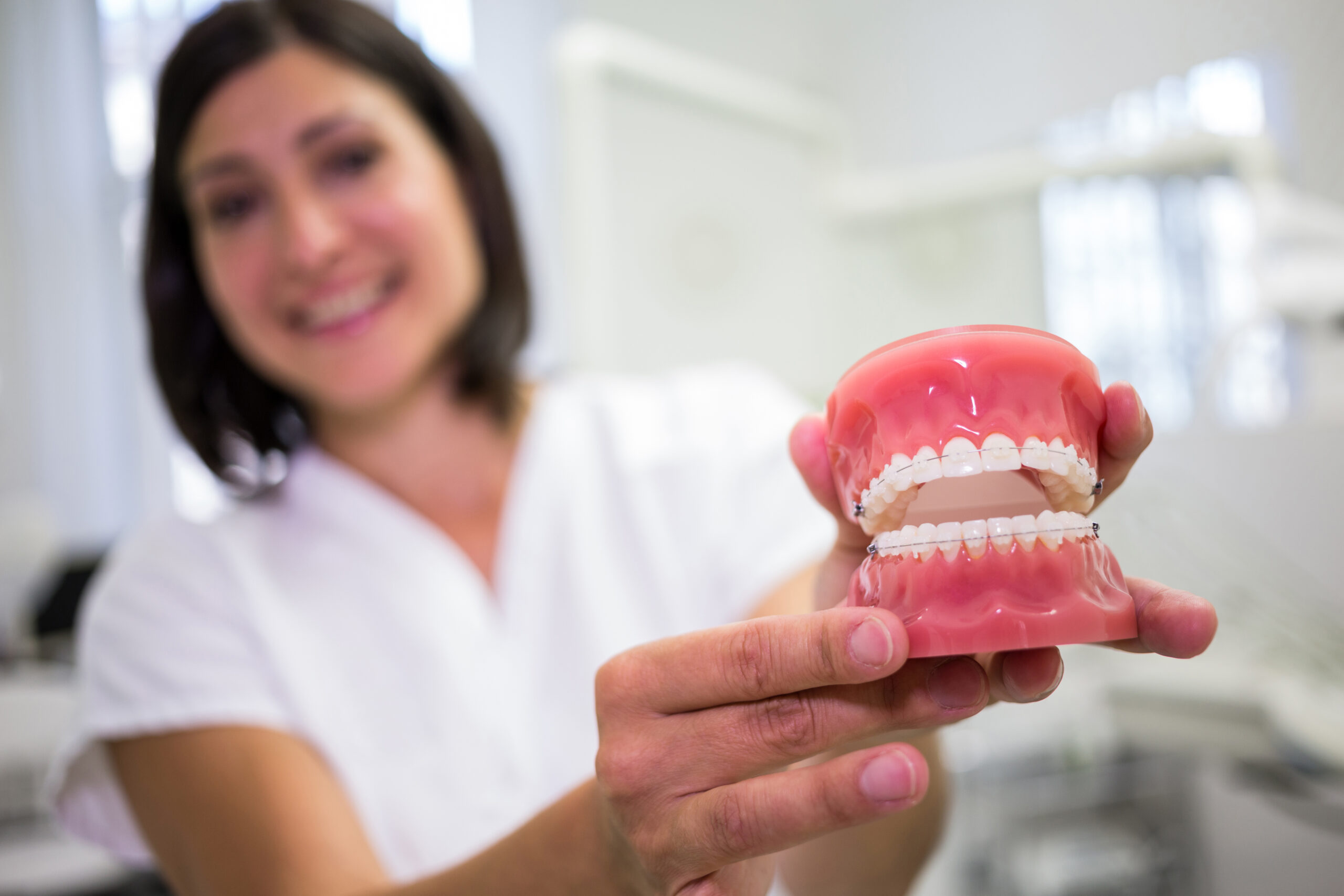
Are you wondering if partial dentures are the right solution for missing teeth?
When patients start exploring tooth replacement options, partial dentures often come up early. They can seem like a straightforward way to restore function without surgery. That’s why many people search for partial dentures in Oxnard hoping to understand if they’re a good long-term fit.
The truth is that partial dentures work very well for some patients, and poorly for others. At Puri Dentistry, we focus on candidacy and long-term adaptation, not just whether a denture can be made.
What Partial Dentures Are Designed to Do
Partial dentures are applied with multiple missing teeth being substituted with the remaining natural teeth. They are detachable devices that fit the gaps and assist in restoring the simple chewing capabilities and appearance.
There is no such thing as fixed restorations, but partial dentures are supported with the help of clasp, rests or precision fixtures. This implies that they get in close contact with the remaining teeth and gums. The quality of their performance is determined to a great extent by the wellbeing and stability of the structures that support them.
Who Typically Benefits Most from Partial Dentures
Partial dentures tend to work best for patients who still have several strong, healthy teeth. These teeth help anchor the denture and distribute chewing forces more evenly.
Patients with stable gum health and minimal bone loss also adapt better. When gums are healthy, partial dentures feel more comfortable and cause less irritation. We often see good outcomes in patients who are committed to daily cleaning and follow-up care.
Why Bite Stability Matters for Success
The role of bite balance to partial denture performance is significant. In case the bite is not even or stable, partial dentures can move in case of eating.
In the event of non-proper distribution of the force, pressure may accumulate in some teeth or regions of the gum. This may lead to soreness and looseness or weakening of supporting teeth in the long run. To prevent these problems, dentists are cautious in their assessment of bite patterns to recommend partial dentures.
The Role of Bone and Gum Support
The support of the bones influences the quality of seating and functioning of a partial denture. Loss of teeth commonly causes progressive bone erosion in these localities and this may alter the denture fit with time.
In case of severe cases of bone loss partial dentures can be less stable and they need to be adjusted more often. Health of gums is also important. During a denture, inflammation or gum disease may deteriorate when hygiene is not taken regularly. These factors influence whether partial dentures in Oxnard are a good long-term option.
Who Usually Struggles with Partial Dentures
There are patients who cannot adjust to partial dentures. This is mostly apparent in cases where teeth remain very few or in cases where the remaining teeth are already weak.
Partial dentures can be unpleasant or unstable to patients who have a great deal of bite collapse, a high level of gum disease, or whose bone loss continues. In such instances, partial dentures can be used as a short-term option as opposed to a permanent one. Dentists look at the possibility of an alternative to a better support of oral health in the long run.
Adaptation: What Patients Often Underestimate
Adapting to partial dentures takes time. Speaking, chewing, and even swallowing can feel different at first.
Patients who succeed with partial dentures in Oxnard are usually patient and consistent. They follow hygiene instructions, attend adjustment visits, and give themselves time to adapt. Those expecting instant comfort without changes often feel disappointed. Understanding this adaptation phase upfront makes a big difference.
Maintenance Demands of Partial Dentures
Partial dentures require daily removal and cleaning. Food and plaque can collect around clasps and supporting teeth.
Without proper care, decay and gum disease can develop around the remaining teeth. We emphasize that partial dentures protect missing spaces only when the surrounding teeth stay healthy. Maintenance is not optional, it’s part of the treatment.
How Dentists Decide If Partial Dentures Are the Right Fit
When evaluating partial dentures in Oxnard, we assess remaining teeth, bone levels, gum health, and bite function. The other things that we consider are lifestyle and the capability of the patient to sustain the appliance.
In the Puri Dentistry we talk about the way partial dentures could work and not only today but also in several years. In case long-term stability appears unstable, we clarify options instead of imposing a temporary solution.
When Partial Dentures May Be a Transitional Solution
Sometimes, partial dentures are put in place as a transition. They are able to give a patient time to be active with temporary solutions as they wait to pursue a more permanent solution.
This can also be effective when the healing, money or medical timing is in need of a flexible approach. It is all about clarity, the patients have to know whether the partial denture is a permanent solution or a step.