
Have you been told you need a “deep cleaning” and wondered why a regular cleaning isn’t enough?
This is a normal question and quite logical. Many patients feel confused or concerned when they hear the term dental scaling and root planing, especially if their teeth don’t hurt. The question arises as to why this treatment is being prescribed today and not a few years back.
At Puri Dentistry, we explain that scaling and root planing is not an upgraded cleaning, it’s a medically necessary treatment used when gum disease crosses specific clinical thresholds. The decision is based on measurable changes, not opinion.
What Dental Scaling and Root Planing Actually Treats
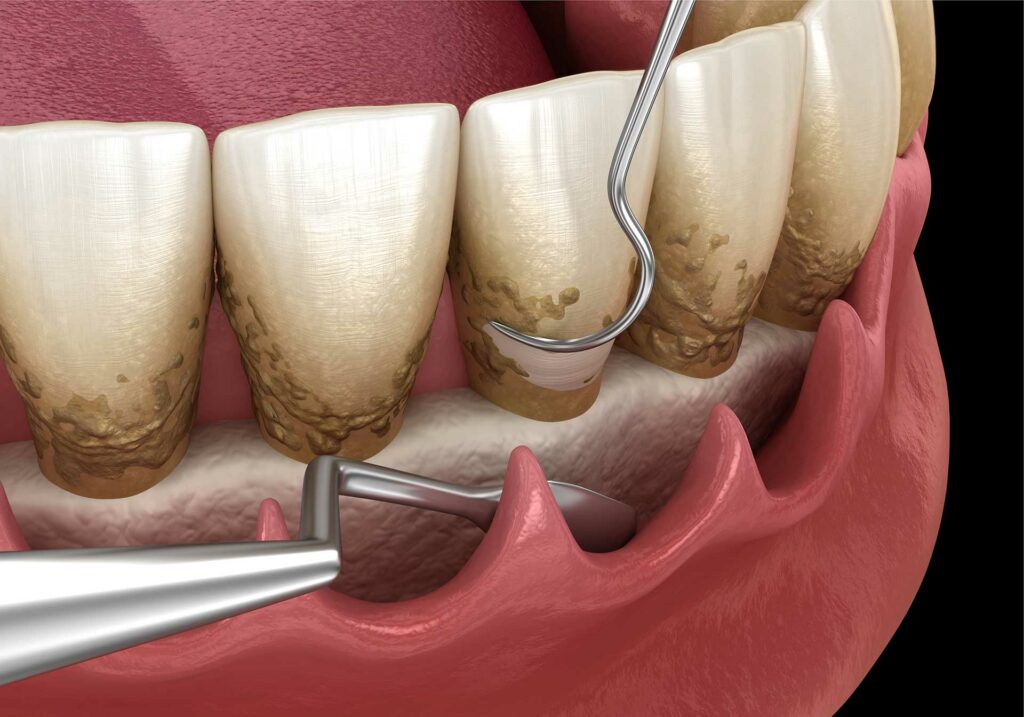
Dental scaling and root planing is designed to treat periodontal disease, not surface plaque. It is used against bacteria and hardened deposits under the gumline inaccessible to regular cleanings.
As the plaque and tartar are deposited below the gums, they cause inflammation that undermines the connection between the dentin and the tissue. Scaling gets rid of such deposits and root planing flattens the root surface to allow the gums to reattach and recover. The process is a solution to the disease.
How Gum Disease Progresses to the Point of Medical Necessity
Gum disease begins as gingivitis, which involves redness, swelling, and bleeding but no attachment loss. At this stage, regular cleanings and home care are usually sufficient.
Dental scaling and root planing becomes necessary when inflammation progresses deeper and the gums start to separate from the teeth. This forms periodontal pockets in which the bacteria proliferate. However, when the process of attachment loss starts, only regular cleanings are not enough to prevent the disease.
The Role of Pocket Depth in Treatment Decisions
Pocket depth is one of the clearest indicators dentists use. Healthy gums typically have shallow pockets that are easy to clean naturally.
When pockets deepen beyond a certain point, bacteria become protected from brushing and flossing. We measure these pockets during exams to track disease progression. Deeper pockets signal that dental scaling and root planing is needed to disrupt bacterial buildup and prevent further damage.
Why Gum Attachment Loss Changes Everything
Attachment loss is the fact that tissues that support teeth are being destroyed. This marks a dangerous level in periodontal disease.
Once attachment loss occurs, the condition is no longer reversible through basic cleaning alone. Without intervention, the disease can continue to progress, leading to bone loss and tooth mobility. Scaling and root planing helps stabilize the attachment and slow or stop further destruction.
Signs That Scaling and Root Planing Is Medically Necessary
Dentists don’t rely on symptoms alone. Some patients feel little discomfort even when disease is advanced.
Clinical signs that indicate medical necessity include:
- Persistent bleeding during probing
- Increased pocket depth
- Visible tartar below the gumline
- Gum recession combined with inflammation
- Early bone changes on imaging
These findings together, not one in isolation, guide the decision to treat.
Why Delaying Treatment Can Lead to Bone Loss
The untreated periodontal disease also persists in destroying the mechanism that holds the teeth. In a period of time, the jaw bone starts to resorb due to chronic infection.
Once bone loss occurs, it cannot be fully reversed. That’s why dental scaling and root planing is often recommended as soon as progression thresholds are met. Early intervention protects bone and helps preserve natural teeth longer.
How Dentists Determine Medical Necessity vs Routine Care
Regular checkups aim at keeping healthy. Scaling and root planning is concerned with dealing with the restoration of health after it has been compromised.
At Puri Dentistry, we base this distinction on measurements, inflammation patterns, and attachment changes over time. When evidence shows that routine care is no longer enough, scaling and root planing becomes the medically appropriate step, not an optional one.
What Happens After Scaling and Root Planing
After treatment, gums are given time to heal and reattach. Follow-up evaluations help determine how well the tissue responds.
In many cases, pocket depths reduce and inflammation improves significantly. Ongoing maintenance becomes critical after treatment to prevent recurrence. Scaling and root planing is part of a larger plan to control gum disease, not a one-time fix.
Why This Treatment Is About Prevention, Not Escalation
Other patients also believe that scaling and root planing imply that their conditions are serious. As a matter of fact, more serious consequences are often suggested to be prevented.
When dentists treat the disease at an early stage, they can minimize the chances of treating the disease at a later stage. Early intervention in the gum disease saves more tissue and increases the stability in the long-term.