
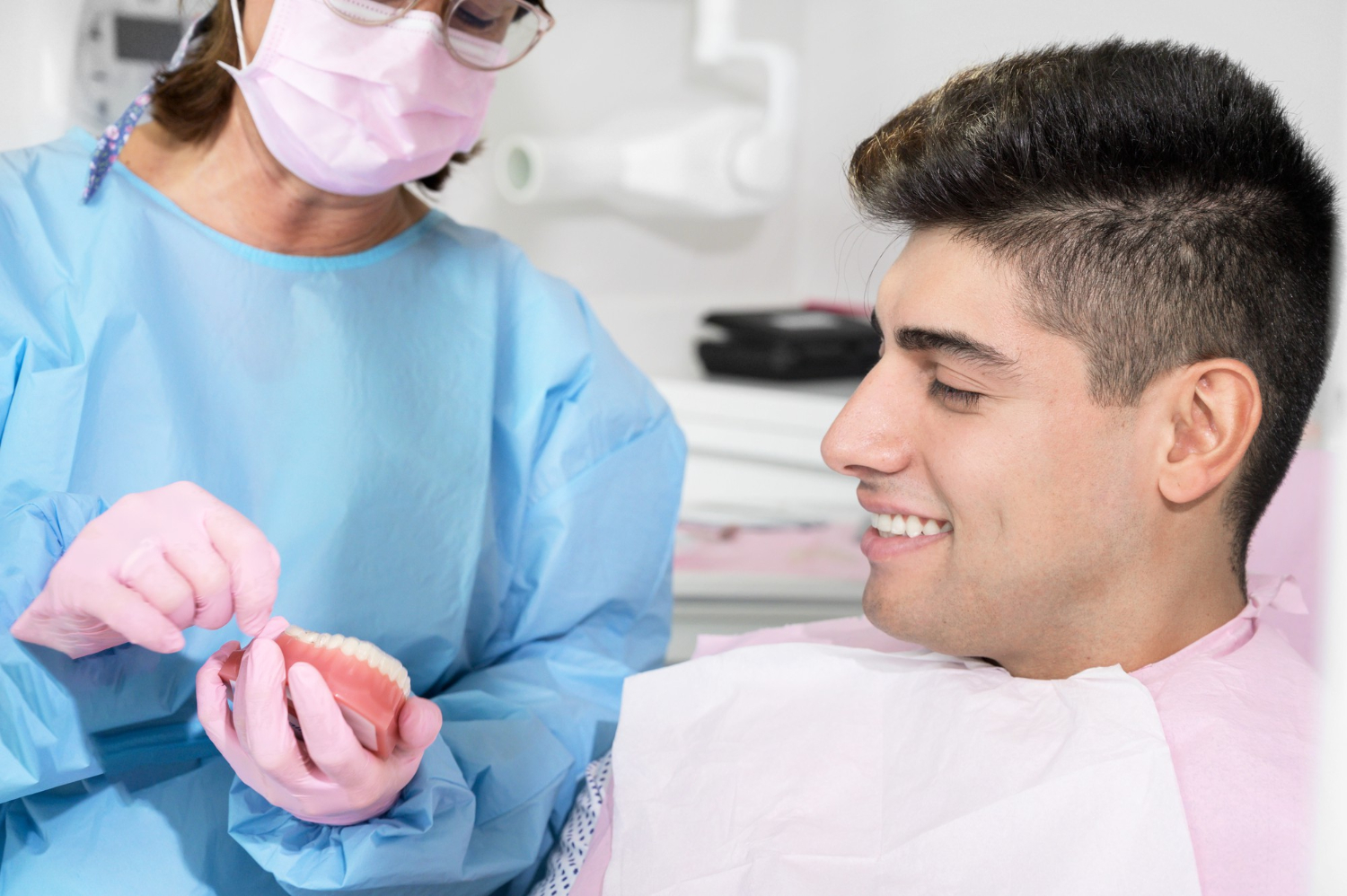
We had a patient come in last month, missing a tooth for almost a year, ready to finally get it replaced and understandably frustrated when we told her we couldn’t jump straight to a bridge that same visit.
She’d been dealing with bleeding gums for a while too, and assumed that was a separate issue entirely, unrelated to replacing her missing tooth. It’s one of the most common misunderstandings we run into, and it’s worth clearing up properly.
So let’s talk about why gum disease and dental bridges in Oxnard are more connected than most patients realize, and why the order of treatment is important.
Why We Can’t Just Skip Ahead to the Bridge
A bridge relies entirely on the teeth next to the gap for support. Those teeth need to be anchored into gum tissue and bone that’s stable and healthy, not inflamed or actively losing structure.
If gum disease is present and untreated, the very foundation a bridge depends on is compromised before the bridge is even placed. This is exactly why dental bridges in Oxnard almost always start with a gum health evaluation first, not the restoration itself.
What Untreated Gum Disease Does to a Bridge Long Term
We’ve seen what happens when this step gets skipped or rushed. Gum disease causes bone loss around the teeth over time, and if that process is still active when a bridge goes in, the supporting teeth can loosen months or years down the line.
What should have lasted over a decade sometimes fails in a fraction of that time, not because the bridge itself was poorly made, but because the foundation underneath it was never stable to begin with.
The Order We Follow With Patients
We typically walk through this in stages, and it’s worth understanding why each step exists rather than feeling like it’s just extra appointments tacked on.
- First, we evaluate how advanced the gum disease is
- Then we start treatment, which might mean deep cleaning or more involved care depending on severity
- We monitor healing over several weeks to confirm the gums have stabilized
- Only once that foundation is solid do we move toward planning the bridge itself
Skipping ahead might feel faster, but it usually just delays things further down the line when problems surface after the bridge is already in place.
Why This Timeline Frustrates Some Patients (And Why We Still Stick to It)
We understand the frustration completely. You’re missing a tooth, you want it fixed, and being told to wait through gum treatment first feels like an unnecessary detour.
But dental bridges in Oxnard placed on unstable gum tissue tend to need replacement far sooner than ones placed after proper healing, which means the “faster” route usually ends up costing more time and money in the long run.
What Happens If Gum Disease Is Only Mild
Not every case requires months of treatment before moving forward. If gum disease is caught early and responds quickly to treatment, healing can happen within a few weeks rather than dragging out. In these cases, we can often move toward bridge planning sooner than patients expect, which is part of why an honest evaluation upfront matters so much before assuming the worst.
How We Approach This at Puri Dentistry
At Puri Dentistry, we won’t place a bridge just because a patient wants to move quickly if the gum tissue underneath isn’t ready for it.
We’d rather have an honest conversation about timeline upfront than deliver a restoration that fails earlier than it should have. It’s not about making things harder, it’s about making sure the investment holds up the way it’s supposed to.
Conclusion
Gum health and tooth replacement aren’t separate conversations, even though they can feel that way at first.
Dental bridges in Oxnard depend entirely on what’s happening beneath the surface, and addressing gum disease first isn’t a delay tactic, it’s the difference between a bridge that lasts and one that quietly starts failing before you’ve even gotten used to it.