
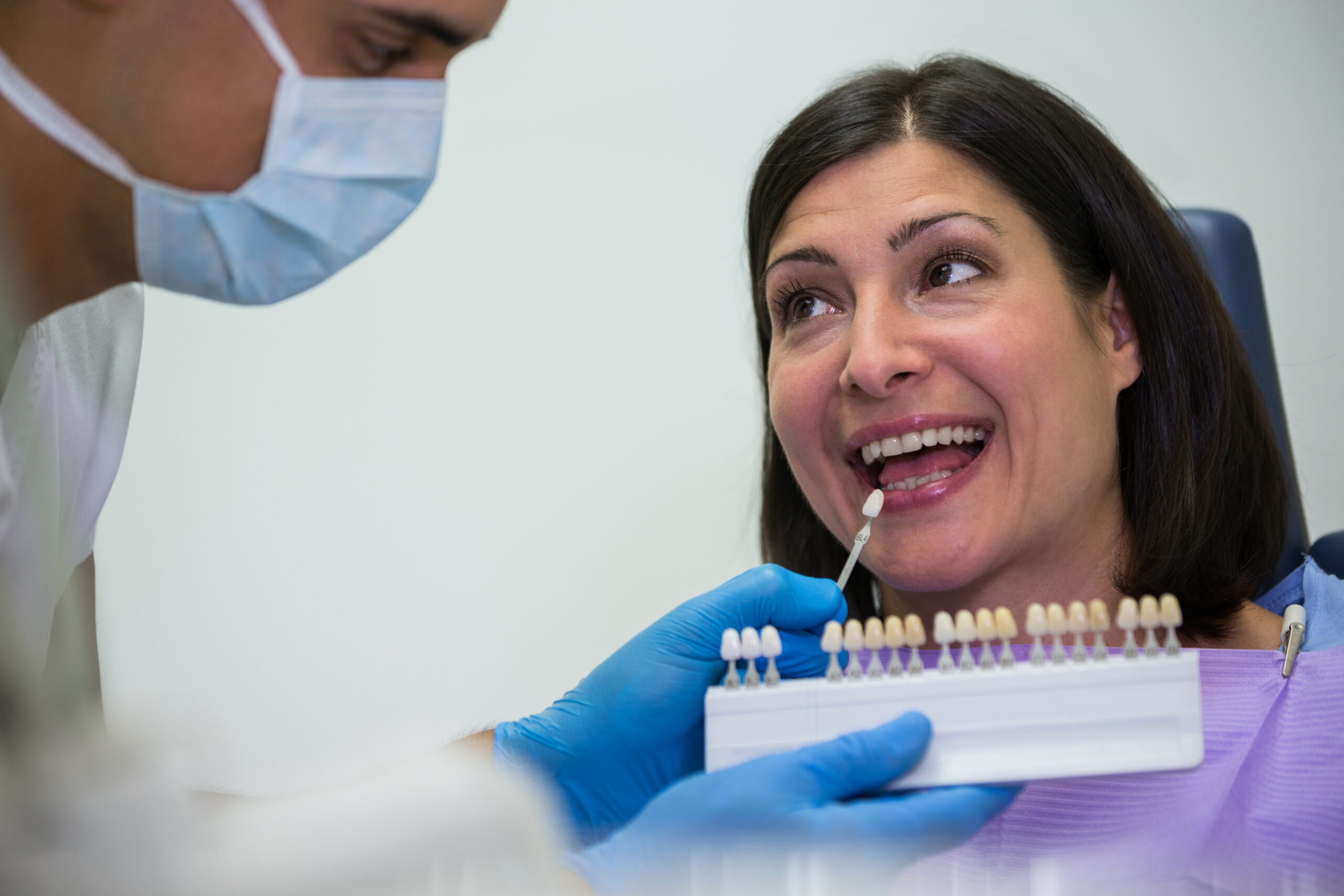
Are you worried that a root canal might damage your porcelain veneer?
This is a very real concern. Patients who already have veneers often ask whether a root canal means the veneer will need to be removed or replaced. It’s natural to worry, especially when you’ve invested in cosmetic dental work.
The good news is that, in many cases, taking care of a porcelain veneer during a root canal treatment can be done easily. In the case of Puri Dentistry, we handle such cases by planning them out so as to treat the tooth without exposing it unnecessarily to harm of the veneer.
Why Root Canal Treatment Is Sometimes Needed Under a Veneer
A porcelain veneer covers the front surface of a tooth, but it does not protect the inner pulp from infection or inflammation. Decay, trauma, or deep cracks can still reach the nerve beneath the veneer.
In case of pulp infection or pain, the root canal will save the tooth. The fact that there is a veneer does not alter the necessity of treatment it simply alters the way it is implemented. It is important to ensure that the infection is treated as soon as the damage is to be avoided.
How Dentists Plan a Root Canal Around a Porcelain Veneer
Taking care of a porcelain veneer during a root canal treatment starts with careful evaluation. Dentists examine the state of the veneer, whether it is intact, bonded, and devoid of cracks and then commence.
The access to the root canals in most instances occurs at the back of the tooth instead of the veneer. The technique will conserve the aesthetic features on the surface and minimize the chances of debonding or chipping. The veneer is one of the most important aspects of protection which involves planning access right.
When a Veneer Can Be Preserved During Treatment
A porcelain veneer can often be saved if it is securely bonded and not already damaged. If the veneer is stable, dentists take extra care to avoid placing stress on it during the procedure.
We also consider how much tooth structure remains underneath. A strong foundation increases the likelihood that the veneer can stay in place after the root canal. Preserving the veneer is usually possible when treatment is done early and methodically.
Situations Where Veneer Removal May Be Necessary
In some cases, removing the veneer is the safer option. If the veneer is cracked, loose, or blocking necessary access, keeping it in place could compromise the root canal or the tooth’s long-term stability.
Removing a veneer does not mean treatment has failed. Sometimes it allows the dentist to properly restore the tooth after the root canal. The decision is based on protecting the tooth first, then planning the best restorative outcome.
Protecting the Veneer During and After the Root Canal
In the treatment, the dentists employ controlled methods of reducing pressure and vibration. The tooth can be restored temporarily after the root canal with the healing process being checked.
We also determine the necessity of addition reinforcement including a crown. At other times, the veneer may still be left in the completed restoration. In others substituting it will guarantee greater long-term strength. This is always aimed at preventing unnecessary redo work.
Why Timing Matters for Veneer Preservation
Postponing a root canal will make it more likely to spread infection and make the tooth weaker. The harder the tooth structure is deteriorated the harder it becomes to maintain the veneer.
Early intervention improves the chances of saving both the tooth and the veneer. This is why dentists encourage patients not to ignore pain or sensitivity just because a veneer is present. Prompt care protects previous dental work.
How Dentists Balance Aesthetics and Tooth Health
A porcelain veneer is, however, useful however, the health of the tooth beneath it is of greater importance. Dentists have to be able to compromise between functional stability and cosmetic preservation.
In Puri Dentistry, we clarify everything to the patient so that he realizes our reason behind making certain choices. Maintaining a veneer is perfect though not at the expense of the success of the root canal and the tooth strength.