
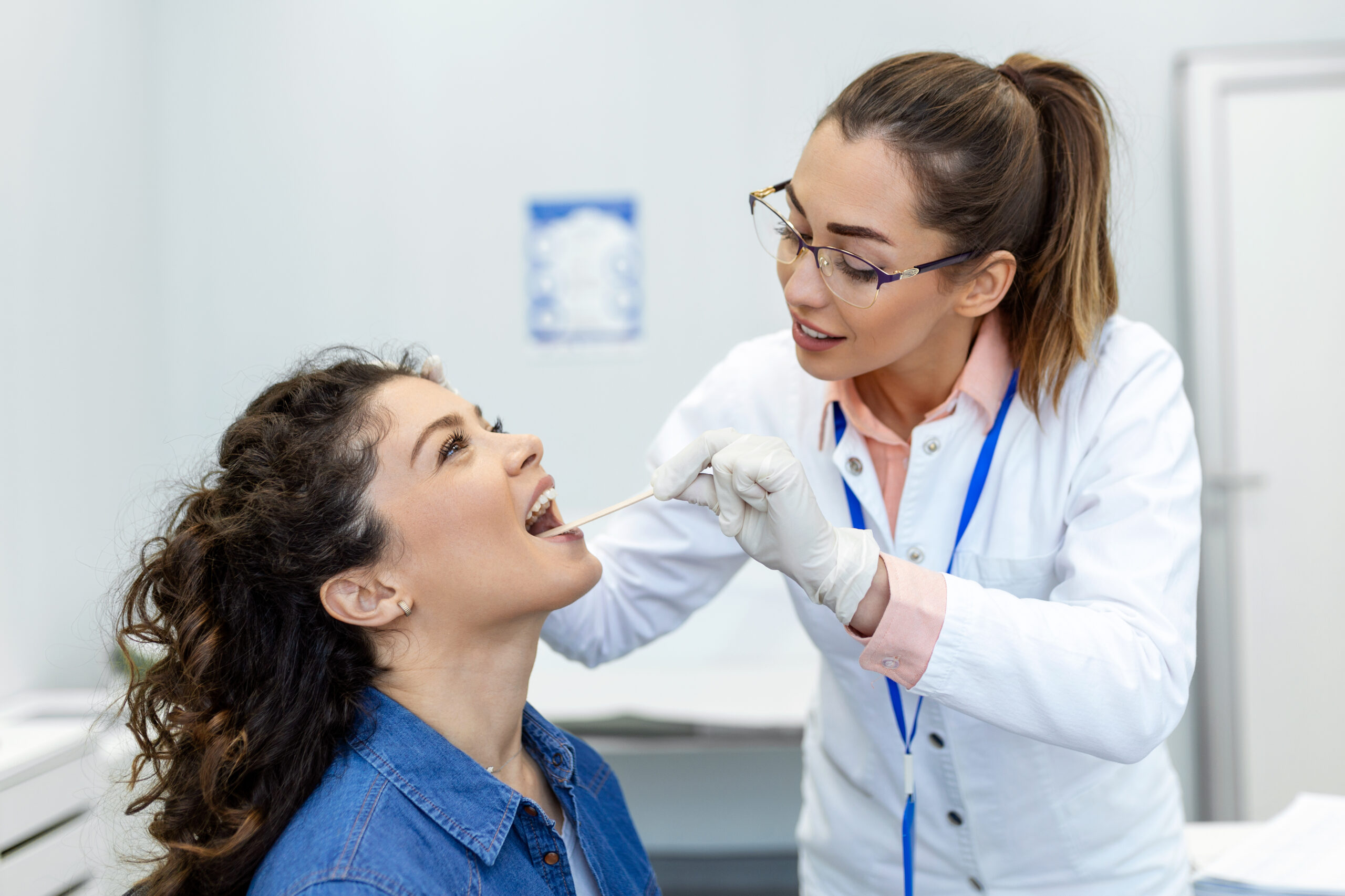
Most people schedule dental visits for cleanings, fillings, or the occasional toothache. Oral cancer screening rarely crosses their minds and that’s exactly the problem. Oral cancer is one of the few cancers that a dentist can detect before a patient has any idea something is wrong. No lump, no pain, no visible sore and yet early-stage changes are often visible to a trained eye during a routine exam.
At Puri Dentistry, oral cancer screening in Oxnard is now part of what we do at every comprehensive visit. Not because we expect to find something alarming, but because catching a potential issue early is one of the most meaningful things a dental team can do for a patient’s long-term health.
Why Oral Cancer Often Goes Unnoticed Early On
Oral cancer can develop in the lips, tongue, cheeks, floor of the mouth, hard and soft palate, sinuses, and throat. In the early stages, it frequently looks like something harmless, a small white or red patch, a slightly rough area, or mild tissue thickening. There is often no pain associated with these early changes, which is why patients rarely bring them up on their own.
By the time oral cancer causes noticeable symptoms, persistent soreness, difficulty swallowing, unexplained bleeding, or a lump that doesn’t go away, it has usually progressed to a later stage. Treatment outcomes are dramatically better when the disease is caught early. That gap between “looks fine” and “is fine” is exactly where screening does its most important work.
What Oral Cancer Screening in Oxnard Actually Involves
The screening itself is non-invasive and takes just a few minutes. During an oral cancer screening in Oxnard, our dental team visually examines all the soft tissue surfaces inside the mouth, including the tongue, gums, inner cheeks, the floor of the mouth, and the back of the throat. We also feel along the jaw and neck for any unusual lumps or swelling in the lymph nodes.
Some dental offices supplement the visual exam with specialized tools such as light-based devices that help tissues fluoresce differently when abnormal cells are present. These tools don’t replace clinical judgment, but they can help bring subtle changes into sharper focus.
If something looks unusual, the next step is typically monitoring it over a few weeks or referring the patient to an oral surgeon or specialist for a biopsy. Finding something worth investigating is not the same as a diagnosis, most abnormalities turn out to be benign. But having the conversation early keeps every option on the table.
Risk Factors Worth Knowing
While oral cancer can affect anyone, certain factors raise the risk meaningfully. Patients who fall into one or more of these categories benefit most from consistent, proactive screening-
- Tobacco use of any kind cigarettes, cigars, pipes, and smokeless tobacco all increase risk significantly.
- Heavy or frequent alcohol consumption particularly in combination with tobacco, which multiplies the risk.
- HPV (human papillomavirus) infection certain strains of HPV are now linked to a growing number of oropharyngeal cancers, including in patients with no tobacco or alcohol history.
- Prolonged sun exposure is particularly relevant for lip cancer in people who spend significant time outdoors.
- Ages over 40, the majority of cases are diagnosed in adults over 40, though the HPV-related rise in younger patients is shifting that pattern.
That said, we perform oral cancer screening in Oxnard for all our patients, not only those with identifiable risk factors. The reality is that a portion of oral cancer cases occur in people with none of the classic risk factors. Screening is not about suspicion; it is about thoroughness.
The Shift Toward Routine Screening
A decade ago, oral cancer screening was something many dental offices only discussed with high-risk patients. That approach has shifted. As awareness of HPV-related oral cancers has grown and early detection data has become more compelling, dental teams across the country including ours have moved toward making it a standard part of the comprehensive exam.
The logic is straightforward: the screening adds almost no time to an appointment, carries zero discomfort, and has genuine life-saving potential. Skipping it simply because a patient appears healthy or has no complaints is a missed opportunity that is hard to justify.
Self-Awareness Between Dental Visits
Professional screening is important, but patients can also play a role in their own early detection. Get in the habit of doing a brief self-check once a month, look at the inside of your mouth in good lighting, feel along your jaw and neck, and take note of anything that seems different. The things to watch for include-
- A sore or patch that doesn’t heal within two to three weeks.
- A white or red area that wasn’t there before.
- Difficulty chewing, swallowing, or moving the jaw or tongue.
- A lump or thickening in the cheek, neck, or under the chin.
Any of these findings, especially if they persist beyond two to three weeks, deserve a prompt dental evaluation. Don’t wait for the next scheduled cleaning if something doesn’t feel right.
Make Oral Cancer Screening Part of Your Routine
The most significant aspect that one should know about oral cancer is that the earlier it is detected the more it can be treated. Oxnard oral cancer screening is not a response to symptoms; it is a proactive measure, which is a part of every dental visit, of every patient, regardless of his or her age or risk profile.
At Puri Dentistry, the oral cancer screening is a normal component of an overall care. In our opinion, prevention and early detection is the key to a healthy mouth and healthier life.